
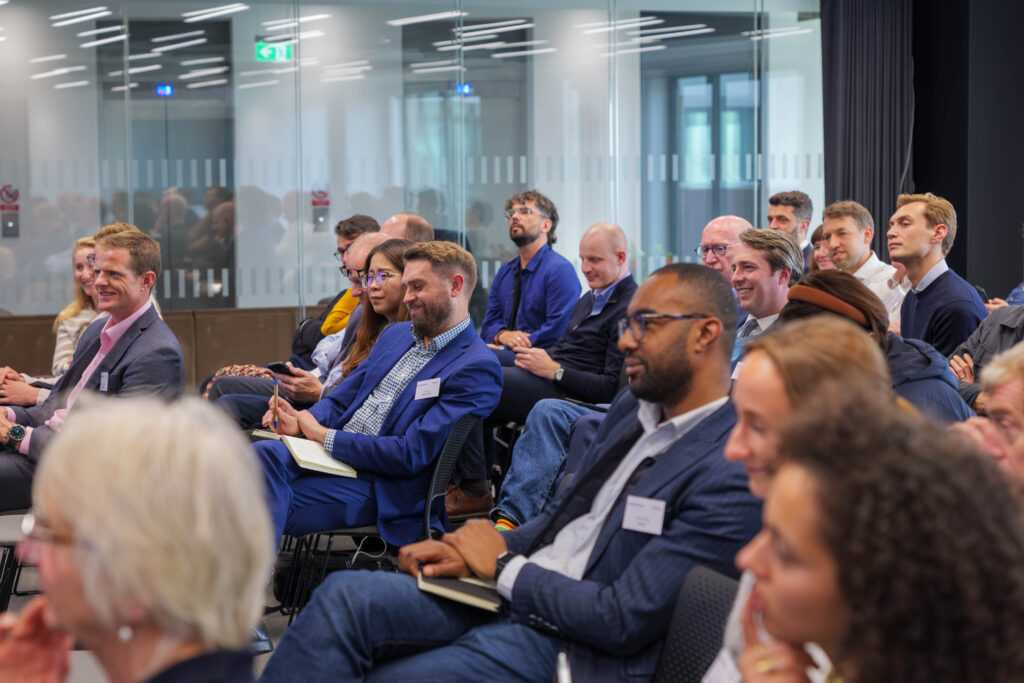
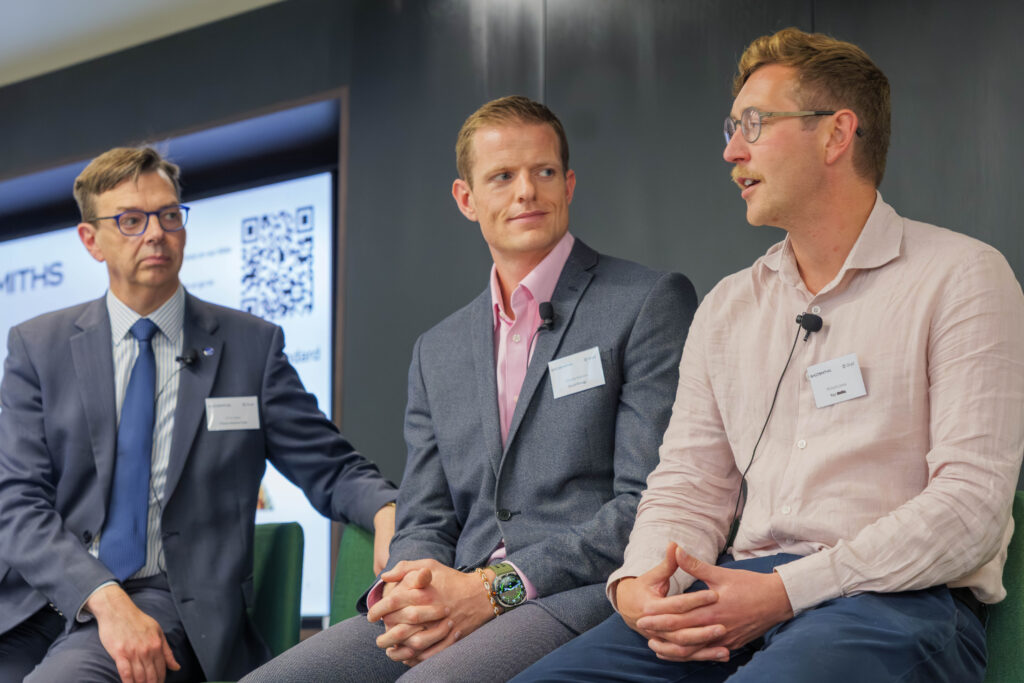
Gryd and Shoosmiths co-hosted a private industry briefing in October focused on the upcoming Future Homes Standard (FHS) and what it means for low-carbon, all-electric new-build homes in the UK.
The event brought together experts from across housing, construction, and clean energy to discuss how the new standard will reshape the way homes are built and powered in the UK – and the solutions already being deployed.
The end of gas and a tipping point for scaling renewables
Speakers agreed the sector is entering “the end of the fossil fuel era of buildings”, with the Future Homes Standard set to accelerate the shift to all-electric new builds, heat pumps, and onsite renewable energy.
While retrofits dominate public debate, new-build policy is seen as the true market trigger. Once major developers adopt all-electric systems across thousands of plots, the market will rapidly mature – unlocking cost efficiencies, skills growth, and supply chain capacity.
The introduction of the Home Energy Model (HEM), the new assessment method replacing SAP, was highlighted as a material change. By modelling 30-minute energy loads instead of monthly averages, HEM will require developers to think more carefully about demand profiles, fabric efficiency, and how systems interact under real operating conditions.
Developers were urged to start thinking about the long term value of renewables rather than costs to be minimised in construction.
Homes as long-term energy assets
Speakers agreed that with decentralised energy systems – particularly solar PV, home batteries, and smart heat pumps – new homes will increasingly act as energy-producing assets. With network costs increasingly shaping energy prices, households that generate and store energy can help balance the grid – and profit from it. Tom Parsons from Good Energy highlighted how homes are set to become valuable energy assets, not just bricks and mortar.
Different ownership and financing models for home renewable energy systems were debated. Some panellists argued that developers should choose to retain ownership of these assets for recurring revenue, or partner with companies like Gryd to provide funded systems at no hardware cost to the homeowner. Others argued that homeowners should own the assets in their homes because public support depends on people directly seeing value – the cheaper their bills, the stronger the backing for the energy transition – but that typically comes at a higher upfront cost.
Delivery challenges: skills, integration, and supply chains
Speakers stressed that low-temperature heat pumps and other low-carbon systems require fabric-first design and integrated controls. In modern homes, hot water energy demand is often on a par with space heating – so cylinder provision, storage, and controls matter. Developers should secure installer capacity early and ensure system integration between solar, heat pumps and storage.
Christopher Gaze from the Future Homes Hub said, “Design your fabric: mitigate against overheating, think about thermal bridging, achieve a good airtightness and ventilate appropriately. Then make sure your space and hot water heating and renewables are designed as one simple system, always remembering to put the resident first.”
Jamie Bursnell from Bellway and Sarah Turpin from Elivia Homes noted that purchasers are now more informed about energy technologies and increasingly expect low-carbon features as a standard part of modern homes.
Between shifting consumer demands and the forthcoming Future Homes Standard, speakers agreed that new complexity is being introduced to the sector – making training essential “from factory floor to front door” according to Jamie.
From manufacturers and designers to installers, site managers and sales teams – each part of the workforce must understand how renewable systems integrate and perform, while homeowners may need clear guidance on how to use these technologies effectively.
The power of a ‘sticky’ consumer story
Developers must build a close link between their technical and sales teams to build a clear customer narrative around low-carbon homes – focusing on comfort, control, lower running costs, and resilience to rising energy prices.
When sales teams can explain how low-carbon features make a home warmer and cheaper to run, customers connect both emotionally and practically.
Sarah from Elivia Homes said: “Whether someone is buying a £300k or £3 million home, they want to know how these systems can help them save money. Developers shouldn’t be afraid to give them the brass tacks.”
Financial models that work for everyone
Speakers agreed that customer value must be central – particularly as homeowners prioritise predictable energy bills and low-carbon living. Energy as a Service (EAAS) models, such as those offered by Gryd and Kensa, can remove upfront costs and stabilise bills, turning renewable tech into a clear selling point.
Crucially, leasing models allow homeowners to access long-term performance and carbon savings without heavy upfront investment, while also avoiding the need for costly future retrofits. By fixing or lowering energy bills for decades, these models make low-carbon homes both affordable and aspirational. They also help maintain value when properties change hands.

The Future Homes Standard must be treated as the baseline
The FHS should be seen as a baseline, not the target. Developers who exceed FHS requirements – through larger solar PV systems, better integration, and smarter home energy management – will gain a competitive edge.
Speakers noted that while solar adoption has risen, average system size has fallen – a consequence of developers installing only the minimal number of panels needed to meet current Part L requirements, often just two or three, resulting in a missed opportunity for both emissions reduction and customer value.
Gryd’s CEO and Co-Founder Mohamed Gaafar said: “The Future Homes Standard is just the baseline. To stand out, we need to go further and make the customer value proposition impossible to ignore.”
Ready to get ahead?
As the UK transitions toward net-zero new builds, collaboration between developers, technology providers, and policymakers will be essential to deliver Future Homes Standard-ready homes at scale.
If you’re a developer or housebuilder exploring how to deliver Future Homes Standard–ready, energy-efficient homes, Gryd can help. Get in touch with our team to discuss fully-funded smart solar and battery systems for your next development.