Overview
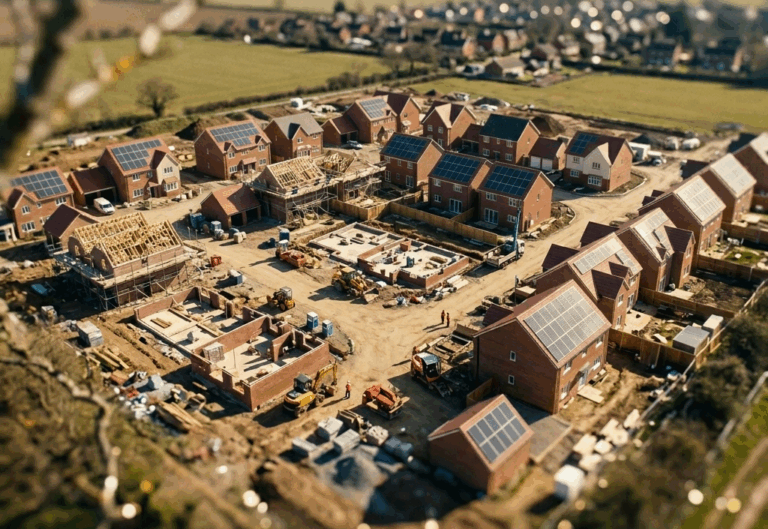
This case study is based on an independent cost analysis conducted by the Technical Director of a UK SME house builder. The developer was evaluating how to meet increasingly stringent energy performance requirements on a 55-home development in East Anglia while protecting project margins.
The analysis compared four specification scenarios across two approaches: the developers current approach of self-supply and a funded solar and battery solution from Gryd Energy. The findings were shared with Gryd, and the developer gave permission to publish the anonymised results.
The Challenge
The developer had built a reputation for delivering high-performance, all-electric homes with an EPC A rating. Their M&E specification was driven by two objectives:
- Low operational carbon
- EPC A as standard
This was achieved through an all-electric, no-gas approach combining excellent fabric performance, direct electric panel radiators, mechanical ventilation with heat recovery (MVHR), waste water heat recovery (WWHR), and substantial
rooftop solar PV.
However, the transition from 2013 to 2021 Building Regulations introduced significantly more stringent requirements. PV requirements increased substantially, and the cost of maintaining an EPC A specification rose sharply.
On their 55-home site, the two largest energy specification cost contributors were PV and MVHR, accounting for an average increase of £9,560 per plot to achieve the required standards. Although adding battery storage is not required
under regulations, it had been an ambition. However, it would push costs to approximately £13,224 per plot and deemed unfeasible.
At a time when build cost pressure across the sector was intensifying, the developer needed a route to maintain their energy specification advantage without absorbing five- or six-figure cost increases across the site.
The Gryd Proposition: What Was Assessed
The developer had built a reputation for delivering high-performance, all-electric homes with an EPC A rating. Their M&E specification was driven by two objectives:
- Low operational carbon
- EPC A as standard
This was achieved through an all-electric, no-gas approach combining excellent fabric performance, direct electric panel radiators, mechanical ventilation with heat recovery (MVHR), waste water heat recovery (WWHR), and substantial
rooftop solar PV.
However, the transition from 2013 to 2021 Building Regulations introduced significantly more stringent requirements. PV requirements increased substantially, and the cost of maintaining an EPC A specification rose sharply.
On their 55-home site, the two largest energy specification cost contributors were PV and MVHR, accounting for an average increase of £9,560 per plot to achieve the required standards. Although adding battery storage is not required
under regulations, it had been an ambition. However, it would push costs to approximately £13,224 per plot and deemed unfeasible.
At a time when build cost pressure across the sector was intensifying, the developer needed a route to maintain their energy specification advantage without absorbing five- or six-figure cost increases across the site.
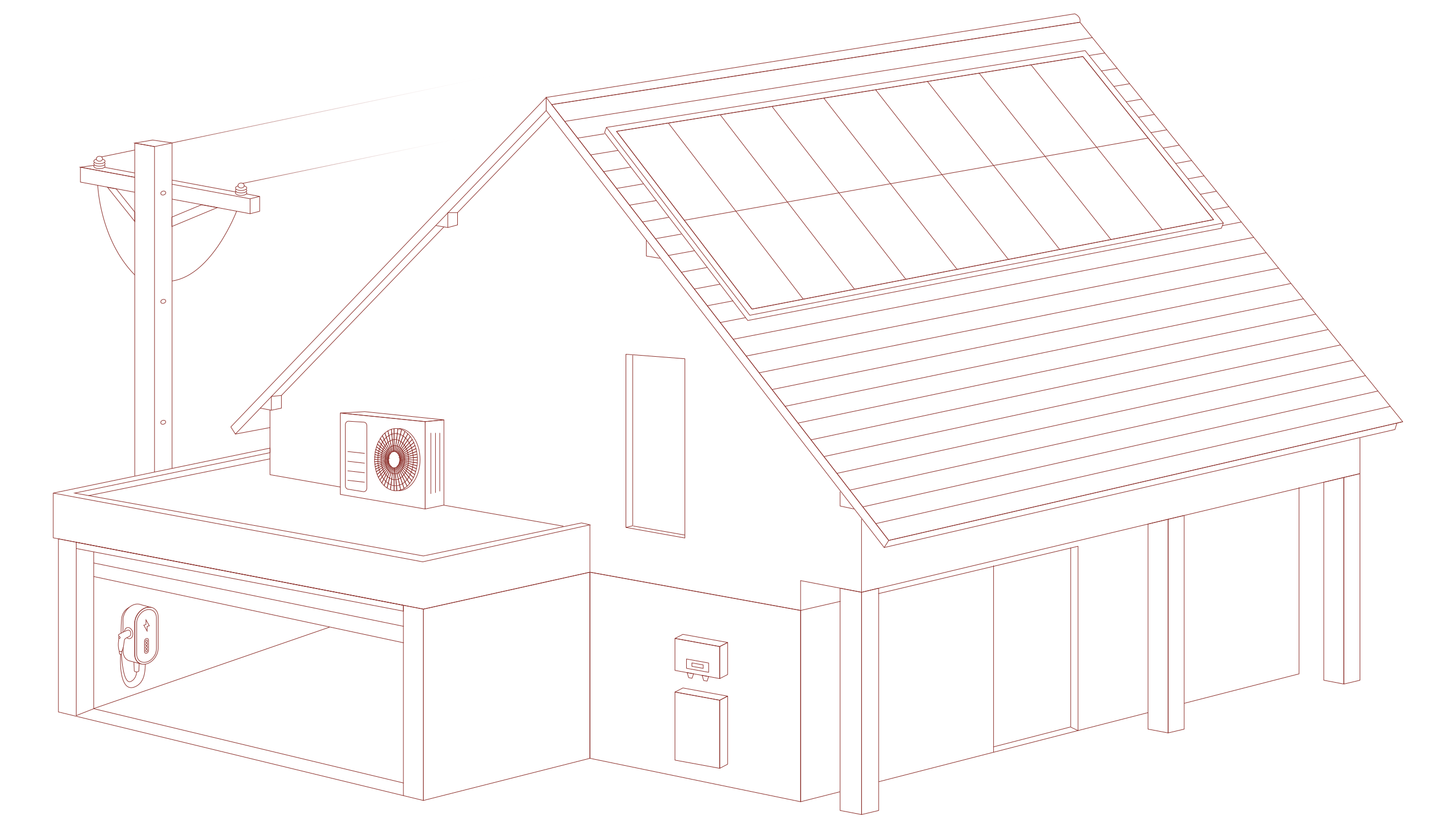
Gryd’s proposal for the 55-home site included:
Sitewide Impact
- Hardware value: £455,277
- Total panels: 922
- Generating capacity: 406 kWp
- Batteries: 55 units
- Storage capacity: 550 kWh
- CO₂ eliminated: 60.4 tonnes/year
Per-Home Impact (Averages)
- Panels per home: 17 (range: 12–24)
- Battery per home: 10 kWh
- Demand served on-site: 69.2%
- Year 1 bill saving: 19.9%
- Lifetime saving: £36,610
- Monthly subscription: £70 avg (£56–£87)
Gryd would specify, fund, and manage the energy systems. Installation would be carried out by the developer’s own subcontractors or a Gryd-recommended installer. The equipment would remain Gryd’s property under an air rights lease structure, serviced and maintained at Gryd’s cost for 25 years. The homeowner can choose to take ownership at any time, and after 25 years, the system is gifted to the homeowner.
The Evaluation
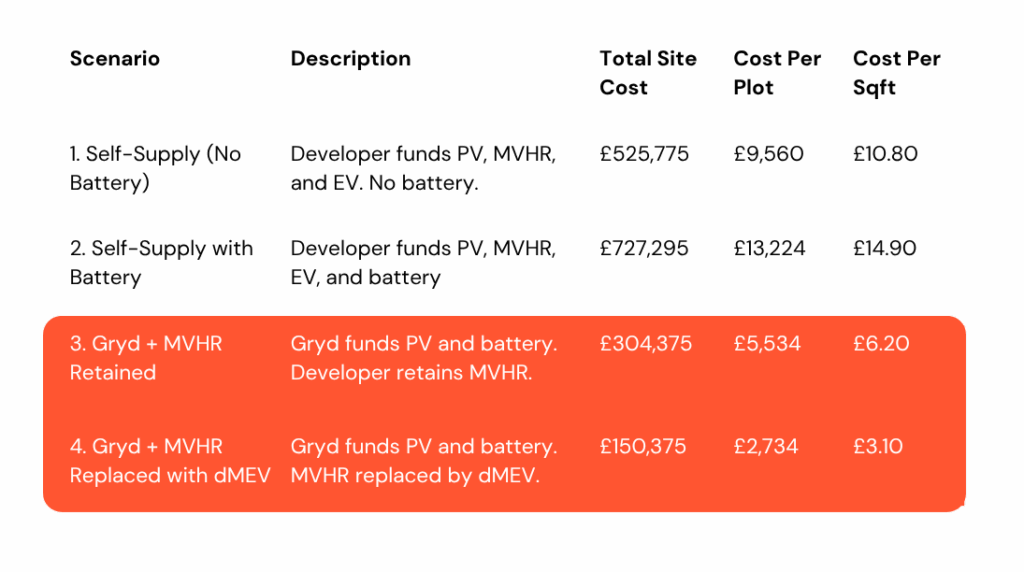
The Technical Director conducted a structured comparison of four scenarios across two approaches, using real costs from the 55-home site. Scenario 1 represents the cost to the developer of meeting their objectives with their current approach of funding all required components, this is the the base case to measure against. Scenario 2 is the same as Scenario 1, but includes a battery in the specification to enable direct comparison with Gryd’s proposal presented in Scenarios 3 and 4. Costs in the table represent the additional cost above the developer’s 2013 Building Regulations baseline for meeting the required compliance and the developer’s low carbon and EPC objectives.
Cost Savings: The Developer‘s Findings
The analysis demonstrated significant savings with Gryd’s offering, which are further improved with the enhanced renewables spec giving the opportunity to replace MVHR with dMEV.
Scenario 3: Gryd with MVHR retained
- Total Site Cost: £304,375
- Saving vs Scenario 1: £221,400 (42% reduction)
- Cost per plot: £5,534 (down from £9,560)
Scenario 4: Gryd with MVHR replaced by dMEV
- Total Site Cost: £150,375
- Saving vs Scenario 1: £375,400 (71% reduction)
- Cost per plot: £2,734 (down from £9,560)
With Gryd covering all hardware costs for the energy systems, the remaining major costs to the developer were installation labour (~£94k, or £1,790/plot), EV chargers (~£32k, or £575/plot) and the cost of the ventilation strategy.
MVHR systems represented a significant per-plot cost (£3,250/plot) and were also a source of ongoing customer care issues.
The switch from MVHR to dMEV was made possible by the larger solar array specified under the Gryd scenarios and the inclusion of battery storage. Under 2021 Part L (the regulations applicable to this site), MVHR contributed meaningful SAP points through its heat recovery performance. Removing it would normally reduce the home’s SAP score and risk losing the EPC A rating. However, the larger solar array (well beyond minimum compliance), combined with battery storage, generated sufficient additional SAP points to offset the loss of MVHR’s contribution. This gave the developer the opportunity to replace MVHR with simpler, lower-cost dMEV at approximately £450/plot while maintaining the target EPC rating.
Strategic Benefits Identified by the Developer
Beyond direct cost savings, the developer’s analysis identified several strategic advantages:
Batteries as a new market differentiator.
The developer found little to no new-build competition in their price range offering battery storage as standard. In a market where EPC A ratings are becoming more common (6% of new builds and rising), batteries represented a genuinely novel selling point.
Day-one buyout as a sales tool.
With an outright purchase option available to homebuyers at a competitive price, the subscription model could flex to suit different buyer preferences without affecting the developer’s cost base.
Zero customer care liability on energy systems.
All equipment would be owned, serviced, and maintained by Gryd for 25 years. The developer would carry no aftercare obligation for PV, batteries, or inverters.
Elimination of MVHR maintenance burden.
MVHR systems were costly to install and were generating customer care issues post-completion. A funded model with battery storage opened the door to replacing MVHR with simpler, lower-maintenance dMEV systems.
With Gryd covering all hardware costs for the energy systems, the remaining major costs to the developer were installation labour (~£94k, or £1,790/plot), EV chargers (~£32k, or £575/plot) and the cost of the ventilation strategy.
MVHR systems represented a significant per-plot cost (£3,250/plot) and were also a source of ongoing customer care issues.
The switch from MVHR to dMEV was made possible by the larger solar array specified under the Gryd scenarios and the inclusion of battery storage. Under 2021 Part L (the regulations applicable to this site), MVHR contributed meaningful SAP points through its heat recovery performance. Removing it would normally reduce the home’s SAP score and risk losing the EPC A rating. However, the larger solar array (well beyond minimum compliance), combined with battery storage, generated sufficient additional SAP points to offset the loss of MVHR’s contribution. This gave the developer the opportunity to replace MVHR with simpler, lower-cost dMEV at approximately £450/plot while maintaining the target EPC rating.
The Broader Context
This analysis was conducted under 2021 Building Regulations against the backdrop of the UK’s transition to the Future Homes Standard. The FHS, published in March 2026 and effective from March 2027, mandates on-site renewable generation, low-carbon heating, and tighter airtightness for all new homes. Because this developer was already targeting an all-electric, high-performance EPC A specification, their fabric, ventilation, and solar PV already align with or exceed FHS expectations. The principal additional change required would be the transition from direct electric heating to heat pumps. The solar and battery components assessed here remain directly applicable under the FHS, where on-site renewable generation is a functional requirement.
The conclusion reached by the developer was clear, a funded solar and battery model does not require compromise. It can simultaneously reduce build cost, improve the specification, eliminate maintenance liability, and strengthen the sales proposition.
Want the full Case Study?
For more information and additional photos from site, please download the full case study as a PDF.